PHONG PHAN
22/8/2024
Asynchronous Processing in JavaScript from A → Z
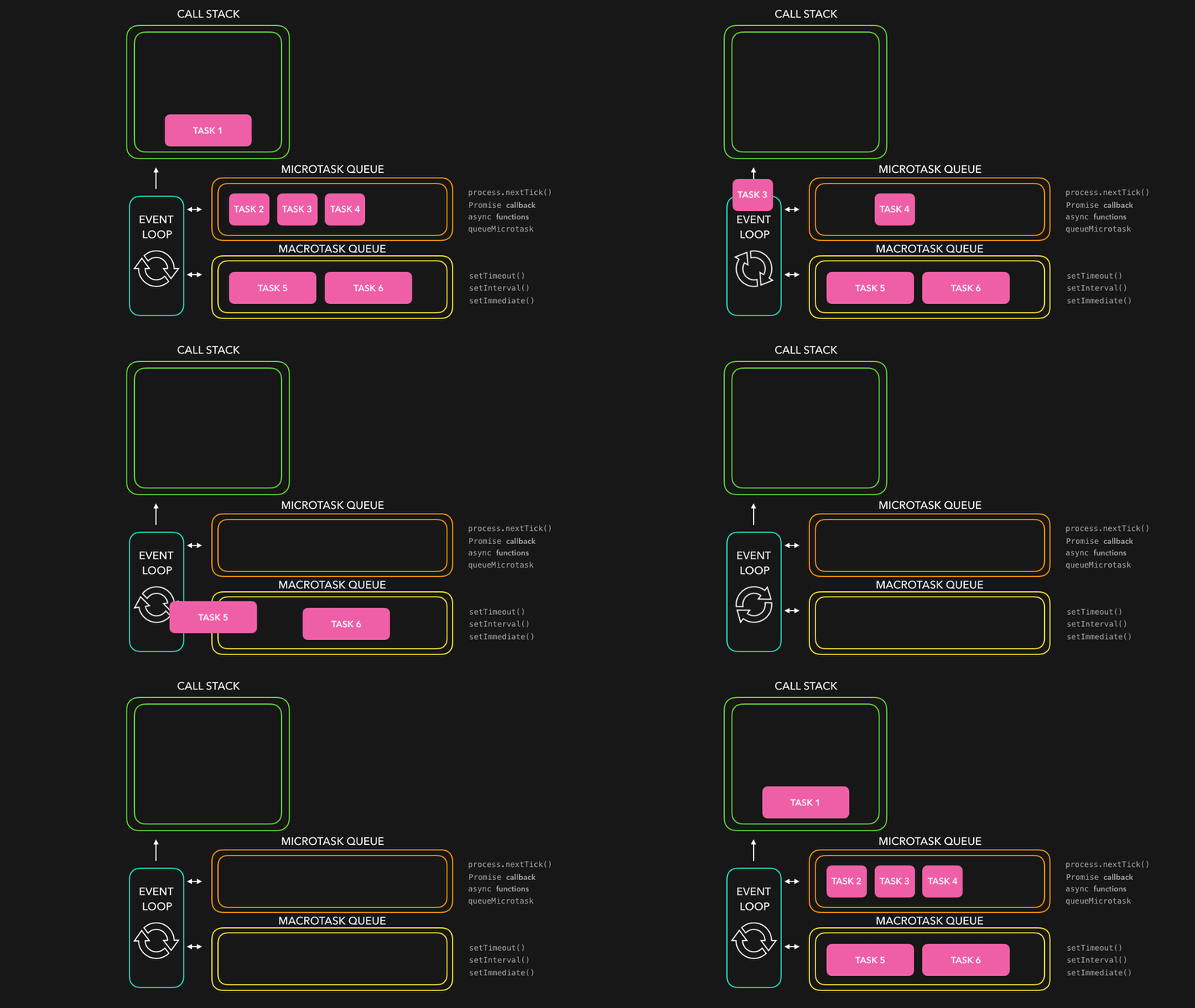
In programming — especially JavaScript — you often deal with asynchronous processing.
Asynchronous Processing in JavaScript from A → Z
In programming — especially JavaScript — you often deal with asynchronous processing. It’s vital because:
- Tasks like API calls, file reading, or user input take time.
- Without async, your app would freeze waiting.
Part 1: What is Asynchronous Processing?
In JavaScript:
- Synchronous: Code runs line by line, and the next line must wait for the previous one to complete.
- Asynchronous: Some tasks do not block the execution — they hand control back to the program and continue after completing later.
Example: Synchronous
DummyComponent.jsx
1console.log("Start");
2console.log("Processing...");
3console.log("End");
4
Result:
DummyComponent.jsx
1Start
2Processing...
3End
Example: Asynchronous (setTimeout)
DummyComponent.jsx
1console.log("Start");
2
3setTimeout(() => {
4  console.log("Processing after 2 seconds");
5}, 2000);
6
7console.log("End");
Result:
DummyComponent.jsx
1Start
2End
3Processing after 2 seconds
🧠 Remember:
JS is single-threaded, but uses an event loop to manage async behavior.
Part 2: Callback, Promise, Async/Await – Deep Dive
1. Callback: "Call me when you're done!"
A callback is a function passed into another function, called after some operation finishes.
Example 1: Callback after delay
DummyComponent.jsx
1function doTask(callback) {
2  setTimeout(() => {
3    console.log("Task done!");
4    callback();
5  }, 1000);
6}
7
8doTask(() => {
9  console.log("Callback invoked after task.");
10});
✅ Easy to understand, but can lead to Callback Hell if deeply nested!
Example 2: Callback Hell
DummyComponent.jsx
1function makeBurger(callback) {
2  setTimeout(() => {
3    console.log("Making the bun");
4    callback();
5  }, 1000);
6}
7
8function addLettuce(callback) {
9  setTimeout(() => {
10    console.log("Adding lettuce");
11    callback();
12  }, 500);
13}
14
15function addSauce(callback) {
16  setTimeout(() => {
17    console.log("Adding sauce");
18    callback();
19  }, 300);
20}
21
22makeBurger(() => {
23  addLettuce(() => {
24    addSauce(() => {
25      console.log("Burger ready!");
26    });
27  });
28});
29
⛔ Problem: Difficult to read, maintain, and debug!
2. Promise: "I promise to return a result... or an error."
Promises help manage asynchronous code more cleanly, avoiding deeply nested callbacks.
Example 3: Basic Promise
DummyComponent.jsx
1function cookRice() {
2  return new Promise((resolve, reject) => {
3    setTimeout(() => {
4      const isSuccess = true;
5      if (isSuccess) resolve("Rice cooked!");
6      else reject("Rice burned...");
7    }, 2000);
8  });
9}
10
11cookRice()
12  .then((result) => console.log(result))
13  .catch((error) => console.error(error));
14
Example 4: Promise chaining
DummyComponent.jsx
1function step1() {
2  return new Promise((resolve) => {
3    setTimeout(() => {
4      console.log("Step 1");
5      resolve();
6    }, 1000);
7  });
8}
9
10function step2() {
11  return new Promise((resolve) => {
12    setTimeout(() => {
13      console.log("Step 2");
14      resolve();
15    }, 500);
16  });
17}
18
19step1()
20  .then(() => step2())
21  .then(() => {
22    console.log("Finished!");
23  });
24
3. Async/Await: "Async code that looks synchronous!"
Async/Await (introduced in ES2017) allows you to write Promise-based code in a synchronous style, making it extremely readable.
Example 5: Basic Async Await
DummyComponent.jsx
1function boilingWater() {
2  return new Promise((resolve) => {
3    setTimeout(() => {
4      resolve("Water is boiling!");
5    }, 1500);
6  });
7}
8
9async function makeTea() {
10  console.log("Boiling water...");
11  const result = await boilingWater();
12  console.log(result);
13  console.log("Making tea...");
14}
15
16makeTea();
Example 6: Error handling with try/catch
DummyComponent.jsx
1function getWeather() {
2  return new Promise((resolve, reject) => {
3    setTimeout(() => {
4      const success = false;
5      if (success) resolve("Sunny!");
6      else reject("Rainstorm...");
7    }, 1000);
8  });
9}
10
11async function showWeather() {
12  try {
13    const forecast = await getWeather();
14    console.log("Forecast:", forecast);
15  } catch (error) {
16    console.error("Error:", error);
17  }
18}
19
20showWeather();
21
✅ try/catch makes error handling very clean.
Part 3: Advanced Techniques
1. Parallel vs Sequential Async
- Sequential: Waits for task A to complete before starting task B.
- Parallel: Runs multiple tasks at the same time.
Example 7: Sequential execution
DummyComponent.jsx
1async function sequential() {
2  const res1 = await fetch('https://jsonplaceholder.typicode.com/posts/1');
3  const res2 = await fetch('https://jsonplaceholder.typicode.com/posts/2');
4  console.log("Sequential done:", res1.status, res2.status);
5}
6
7sequential();
8
Example 8: Parallel execution using Promise.all
DummyComponent.jsx
1async function parallel() {
2  const [res1, res2] = await Promise.all([
3    fetch('https://jsonplaceholder.typicode.com/posts/1'),
4    fetch('https://jsonplaceholder.typicode.com/posts/2'),
5  ]);
6  console.log("Parallel done:", res1.status, res2.status);
7}
8
9parallel();
10
✅ Promise.all saves time by executing tasks concurrently.
2. Promise.race vs Promise.allSettled
Promise.race: Returns the first settled promise (whether resolved or rejected).Promise.allSettled: Waits for all promises to settle (regardless of success or failure).
Example 9: Promise.race
DummyComponent.jsx
1async function fastestOne() {
2  const result = await Promise.race([
3    fetch('https://jsonplaceholder.typicode.com/posts/1'),
4    fetch('https://jsonplaceholder.typicode.com/posts/2')
5  ]);
6  console.log("Fastest response:", result.url);
7}
8
9fastestOne();
10
Example 10: Promise.allSettled
DummyComponent.jsx
1async function checkAll() {
2  const results = await Promise.allSettled([
3    Promise.resolve("Success"),
4    Promise.reject("Failure"),
5  ]);
6  console.log(results);
7}
8
9checkAll();
Result:
DummyComponent.jsx
1[
2  { status: "fulfilled", value: "Success" },
3  { status: "rejected", reason: "Failure" }
4]